This post may contain affiliate links. Please see my disclosure policy for more information.
10 Things You Should Never Put Down the Drain
It is easy to pour something down the kitchen sink or bathroom drain without giving it much thought. After all, if it is small enough to go down the drain, it should be fine, right? Unfortunately, that is not always the case.
Some everyday household items can build up inside your pipes, cause stubborn clogs, damage plumbing, or contribute to problems with your local sewer system. Even if you have a garbage disposal, there are certain things you should keep out of your drains.
The good news is that avoiding these common mistakes is easy, and it could save you the expense of calling a plumber. Here are 10 things you should never put down the drain and what to do with them instead.
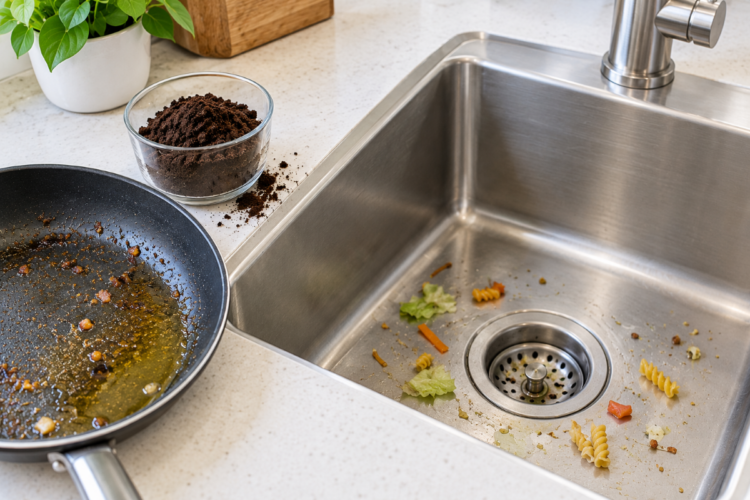
1. Grease, Oil, and Cooking Fat
Cooking grease is one of the biggest culprits behind clogged kitchen drains. It might look harmless when it is hot and liquid, but grease cools as it travels through your pipes and can stick to the inside walls. Over time, it can collect other food particles and create a stubborn blockage.
This includes bacon grease, hamburger drippings, butter, shortening, and leftover cooking oil. Even if you run hot water while pouring grease down the sink, it can eventually cool farther down the plumbing.
What to do instead: Let grease cool in a heat-safe container and dispose of it in the trash once it has solidified. For small amounts of oil, wipe the pan with a paper towel before washing it. If you have a large quantity of used cooking oil, check your local waste disposal guidelines for proper disposal or recycling options.
2. Coffee Grounds
Coffee grounds may seem like a natural, harmless material to rinse down the sink, but they can contribute to clogs. They do not dissolve in water, and they can collect inside pipes, particularly when combined with grease and other debris.
You might not notice a problem after dumping coffee grounds down the drain once or twice. However, repeated disposal can contribute to a buildup that eventually slows the water flow.
What to do instead: Toss coffee grounds in the trash or add them to your compost pile. They can also be used in certain garden and composting applications. Just avoid piling them heavily around plants, since too much can create a dense layer that interferes with water movement.
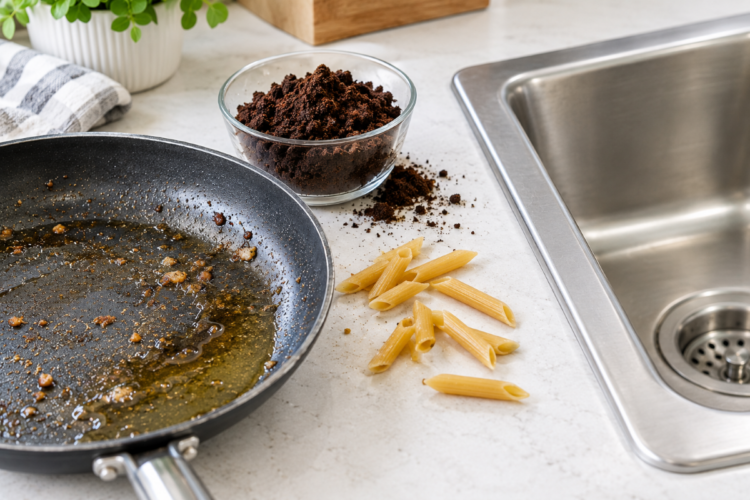
3. Rice, Pasta, and Other Starchy Foods
Leftover rice and pasta can cause more trouble in your drain than you might expect. These foods absorb water, swell, and can become sticky. When they collect in pipes or mix with other debris, they may contribute to a blockage.
Potato peels are another item to watch out for. They can form a thick, starchy mass, especially in a garbage disposal. Even small quantities can add up if you regularly rinse them down the sink.
What to do instead: Scrape leftover rice, pasta, and potato peels into the trash or compost them where appropriate. If you have a garbage disposal, remember that it is not designed to handle every type of food waste.
4. Flour and Dough
Flour and water might seem harmless, but together they create a sticky paste that can cling to the inside of your pipes. When you rinse flour, bread dough, pancake batter, or similar mixtures down the sink, they can coat surfaces and trap other debris.
This is especially problematic when flour combines with grease or food scraps that are already in your plumbing.
What to do instead: Scrape excess dough and batter into the trash before washing bowls and utensils. Wipe flour off countertops and mixing equipment with a dry cloth or paper towel first. A little extra cleanup now can help prevent a much bigger mess later.
5. Eggshells
Many people believe eggshells help sharpen garbage disposal blades. However, modern garbage disposals do not have blades that sharpen this way, and eggshells are not a reliable way to clean or maintain the appliance.
Small shell fragments and the membranes inside eggshells can collect in some parts of a disposal or contribute to debris buildup in the plumbing. They are not worth the risk when there are easier ways to dispose of them.
What to do instead: Throw eggshells in the trash or add them to your compost. If you compost them for your garden, crush them into smaller pieces to help them break down more easily.
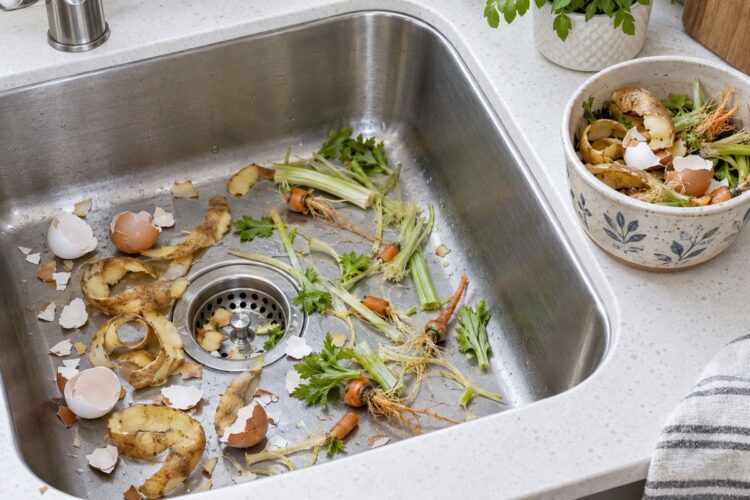
6. Fibrous Vegetables and Stringy Food Scraps
Not all food scraps belong in a garbage disposal. Celery strings, corn husks, asparagus ends, artichoke leaves, and similar fibrous materials can wrap around disposal components or become tangled together.
Onion skins can also be troublesome because their thin, papery layers may pass through the disposal without being fully broken down. These scraps can contribute to clogs when they collect with other waste.
What to do instead: Put stringy vegetable scraps in the trash or compost them. If you are prepping vegetables for dinner, keep a small bowl nearby to collect scraps instead of rinsing everything down the sink.
7. Flour-Based and Starchy Liquids
You might already know not to dump a bowl of flour down the drain, but thick cooking liquids can create similar problems. Starchy water from cooking rice or pasta, leftover gravy, and thick sauces may leave residue behind or contribute to buildup when combined with grease and food particles.
This does not mean every small amount of leftover sauce will clog your pipes. The bigger concern is regularly disposing of thick, sticky, or greasy mixtures down the drain.
What to do instead: Let thick leftovers cool and scrape them into the trash. For cooking water, allow solid food particles to settle and strain them into the trash before disposing of the remaining liquid in accordance with local wastewater guidance. Avoid pouring greasy or unusually thick mixtures into the sink.
8. Paint, Solvents, and Harsh Chemicals
Leftover paint, paint thinner, solvents, and certain household chemicals should not be poured down a sink drain. Some products can harm plumbing materials, interfere with wastewater treatment, or introduce hazardous substances into the environment.
Even water-based paint can create problems when it is poured out in large quantities. Oil-based paints and solvents require particular care because they may be flammable or contain hazardous ingredients.
What to do instead: Keep these products in their original containers and follow the label instructions for disposal. Contact your local household hazardous waste program to find out where to take leftover paint, solvents, and other chemicals. Never mix chemicals together or pour them down any drains.
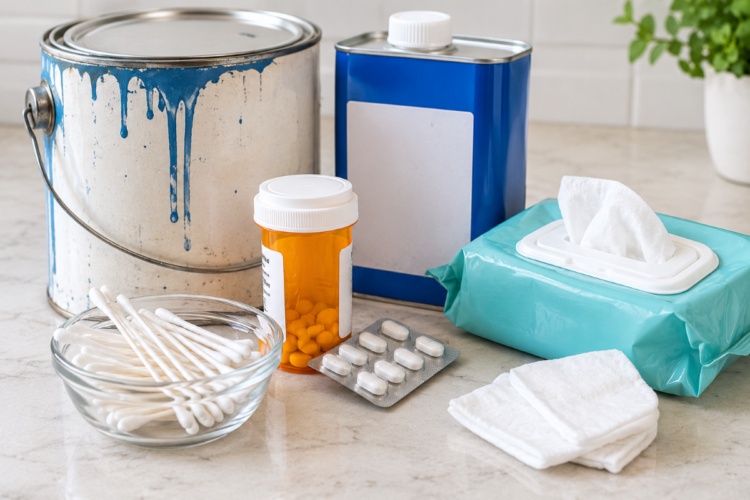
9. Medications and Personal Care Products
Unused prescription medications, over-the-counter medicines, and certain personal care products should not automatically be flushed or washed down the drain. Wastewater treatment systems are not designed to remove every pharmaceutical or chemical compound, and some substances can reach the environment.
This includes many liquid medications and products containing ingredients that may be harmful to aquatic life. Although certain medications have specific disposal instructions, flushing should only be done when the product labeling or official guidance specifically recommends it.
What to do instead: Look for a local medication take-back program or pharmacy collection site. If neither is available, check the medication label and the FDA’s disposal guidance for the appropriate method. Do not assume that dissolving a product in water makes it safe to dispose of.
10. Wipes, Paper Towels, and Feminine Hygiene Products
Even products labeled as flushable can cause problems in household plumbing and sewer systems. Unlike toilet paper, many wipes do not break down quickly enough to pass through pipes without causing trouble.
Paper towels are also designed to hold together when wet, which makes them more likely to contribute to blockages. Tampons, sanitary pads, cotton swabs, and similar products can swell, snag on pipe surfaces, or collect with other debris.
What to do instead: Put wipes, paper towels, cotton swabs, and feminine hygiene products in the trash. The only items that should routinely be flushed are human waste and toilet paper, unless your local plumbing or wastewater authority provides different instructions.
A Few Simple Habits to Help Prevent Clogged Drains
Keeping unwanted items out of your drains is one of the easiest ways to help protect your plumbing. Fortunately, you do not need expensive products or complicated routines to get started.
- Use a sink strainer. A simple mesh strainer catches food scraps before they enter the drain.
- Wipe greasy pans before washing. Removing grease with a paper towel helps keep it out of your pipes.
- Keep a scrap bowl near the sink. It makes it easier to collect food waste while cooking and cleaning.
- Clean your garbage disposal properly. Follow the manufacturer’s instructions rather than relying on eggshells or other food scraps to clean it.
- Dispose of chemicals responsibly. Check local guidelines before getting rid of paint, solvents, or other potentially hazardous products.
A few small changes can make kitchen cleanup easier and help reduce the risk of an expensive plumbing problem.
Frequently Asked Questions
Can I pour boiling water down the drain to prevent clogs?
Boiling water is not a reliable way to prevent clogs, and it can damage certain pipes, seals, or plumbing components. Hot water may temporarily move some grease farther down the line without removing it. Follow your plumbing manufacturer’s recommendations and avoid pouring boiling water into a drain as a routine cleaning method.
Is it safe to put food scraps down a garbage disposal?
A garbage disposal can handle some food scraps, but it is not designed for everything. Grease, coffee grounds, large quantities of starchy foods, fibrous vegetables, and bones or other hard materials outside your unit’s recommendations can cause problems. Check your manufacturer’s instructions for the foods your particular model can handle.
Can I use baking soda and vinegar to unclog a drain?
Baking soda and vinegar can create a fizzing reaction, but that reaction does not reliably remove serious clogs. For a minor blockage, try a plunger or a drain snake that is appropriate for your plumbing. If you use a commercial drain cleaner, follow the label carefully and never mix it with other cleaners.
What should I do if my drain keeps clogging?
If a drain repeatedly clogs, drains slowly, or develops a foul odor, there may be a buildup deeper in the plumbing. Avoid repeatedly pouring harsh chemicals into the drain. A plunger or drain snake may help with a minor blockage, but persistent problems or multiple slow drains may require a plumber.
It is easy to forget that whatever goes down the drain has to travel somewhere. Grease, food scraps, wipes, and household chemicals can create problems that are much more expensive than taking a few extra seconds to dispose of them properly.
The next time you clean up after cooking or empty something out, think twice before pouring it down the sink. A little prevention can help keep your plumbing working properly and save you money in the long run.

- 【Premium Materials】: Stainless steel sink strainer, bright, long-lasting, rustproof.
- 【Upgrade Design】: Our sink strainer upgrade the double-layer design over the sharp edges prevent yours hands from cutting.
- 【Easy to Use】: Our sink strainers are easy to use without any tool installation, easy remove and place, and easy to clean by hand wash or rinse with just warm soapy water.
- 【Suitable Holes】: 0.08 inch diameter drain pore for smooth drainage and meanwhile filter out more food particles.
- 【Widely Used】: Outer diameter: 4.5 inch; inner filter: 3 inch; depth: 1 inch. Please measure the size of your sink before purchasing, in order to determine whether our product is suitable for your sinks.

- 【Metal Claw Grabber for Stubborn Clogs】 This extra-long 35.5-inch metal grabber features a flexible yet sturdy shaft and a 4-claw tip that opens and closes by the handle. It bends easily into curved pipes and P-traps to latch onto solid obstructions, toys, and thick hair clogs that plastic snakes simply can’t grip.
- 【6 Extra-Long Drain Snakes】 With a 25-inch length that reaches deeper than standard 20-inch tools, these highly flexible barbed wands glide into tight drains to hook hair, food particles, and grime. The tiny hooked teeth make insertion smooth and removal effective, and they rinse clean in seconds for repeated use.
- 【2 Pipe Brushes for Daily Maintenance】 These durable, bendable brushes reach the pipe inner walls to scrub away stubborn buildup, slime, and odor-causing residue that clogs often start from. Regular use helps maintain a smooth water flow, prevent future blockages, and keep drains fresh without harsh chemicals.
- 【9-Piece All-in-One Professional Tool Set】 Everything you need in one kit: 1 metal claw grabber for tough clogs, 6 drain snakes for hair, and 2 pipe brushes for routine deep cleaning. It’s a cost-effective alternative to expensive plumber visits, covering removal, extraction, and prevention with a single set.
- 【Simple Operation and Wide Application】 Just insert, twist or push, and pull out the clog—no complicated steps. Suitable for kitchen sinks, bathroom basins, showers, bathtubs, toilets, and sewer drains. The tools are reusable and designed to be safe for your pipes while delivering strong cleaning performance.

- Professional: This professional plumbers snake comes complete with 25 ft Steel, more than enough for most household clog, keeping your drains flowing smoothly. In addition, the pipe snake comes with a pair of gloves, which help to keep your hands clean and safe. What's more the springs can be stored in the drum to keep it tidy than conventional drain cleaner.
- Easy to Use: The sewer snake spring is both flexible and tough to enable you to easily take tight bends, and the large crank knob and grip handle makes it easy to use, our drain snake with drill attachment could Use Manually or Powered(not included drill), which help to remove the blockages more convenient and effective. (NOTE: Need to pull the spring out or feed it back by hand. For sticky and hard clog, please pour in liquid clog remover to loose the blockage before operate the drain auger which will help a better dredging.)
- Multiple Uses for Tackling Clogs: This snake drain clog remover is professional using for various drains such as kitchen, bathroom, utility sinks, bathtubs, and shower drains, sewer and floor drains. The drain clog hair remover is equipped with special tips for clearing downspouts and even central vacuum lines. (NOTE: For pipe diameter from 1/2" to 3". Not for clog for toilets)
- Premium Quality: The sink drain clog remover is made of high-impact ABS drum housing for long-lasting durability. The springs are made of high-quality 72A Mn-steel, our shower drain clog remover also offers an upgraded metal mouth to reduce wear, an easy to use stop screw to secure the cable in place.
- Life Time Support: Suggest to unblock the drain 2-3 month/time to keep it clean. It is better than to spending over hundreds of dollars in liquid drain removals or calling a plumber every time when you meet a clogged drain in your house. This drain cleaner tool is reusable and saving your money and time.

- TRUSTED BRAND: Drano Max Gel Drain Clog Remover is the #1 Selling Gel Drain Cleaner*. Avoid spending money on a plumber and use Drano.
- FAST-ACTING: Starts working in 7 minutes. For best results, pour 16 oz slowly over drain. For extremely slow-running drains or complete clogs, use 32 oz. Allow Drano to sit for 15-30 minutes and flush with hot tap water. Repeat if necessary.
- REMOVES CLOGS: Pours through standing water straight to the clog. Use Drano whenever major clogs occur.
- SAFE ON PIPES: Safe for bathroom and kitchen sinks. Drano Max Gel includes an ingredient to protect pipes from corrosion over time without compromising the efficacy of the clog remover.
- GREAT FOR PREVENTING CLOGS: Act on slow running drains before the clog forms. Cheaper than a plumber.